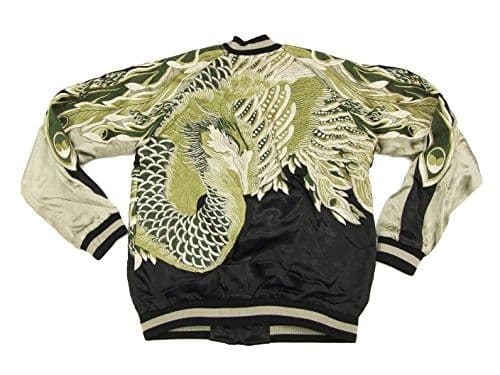
A sukajan (スカジャン), also known as souvenir jacket or tour jacket, is a type of satin blouse jacket often embroidered with orientalist motifs that originated in post-World War II occupied Japan. They were a souvenir created by Japanese craftspeople for American servicemen stationed in Japan. Initially they were made on commission, either by embroidering the servicemen's own military flight jackets, or from scratch. Modeled after bomber, varsity, and baseball jackets, they were crafted using lustrous materials like rayon and, more commonly, silk. When silk was not available, as was often the case due to silk shortages in Japan at the time, nylon, acetate, and even leftover parachute silk were used instead. The jackets were produced in the nearby towns of Kiryū and Ashikaga by skilled artisans from Japan's traditional kimono industry, which had been disrupted by the war.
The embroidered designs were prominently displayed on the back, with additional motifs appearing on the chest and sleeves. Unlike the embroidered kimonos which exclusively featured traditionally feminine motives like Japanese flowers, especially wisteria, chrysanthemums, and cherry blossoms, sukajan as designed specifically for the servicemen, typically included bold imagery such as fierce animals from Asian mythology and art (tigers, dragons or koi), or American military insignia or iconography, maps of Japan or battle locations, or eagles, fighter planes, or Native American motifs, or text commemorating specific military units or tours of duty, or mount Fuji.